welcome to my page. thank you. i am very glad. i hope you will find what you want

Friday, 22 July 2016

WHAT IS FORENSIC SCIENCE BY AHMAD YAKUBU ALCHEMY

What is Forensics?

The term forensic science involves forensic (or forensis, in Latin), which means a public discussion or debate. In a more modern context, however, forensic applies to courts or the judicial system. Combine that with science, and forensic science means applying scientific methods and processes to solving crimes.
Sponsored School

Capella University is proud to be partnered with the FBI National Academy Associates (FBINAA). Capella's 100% online criminal justice degree programs are led by professors with real-world experience and even allow you to earn credit for POST (Peace Officer Standards and Training). - Request Free Info
  From the 16th century, when medical practitioners began using forensic science to writings in the late 18th century that revealed the first evidence of modern pathology, to the formation of the first school of forensic science in 1909; the development of forensic science has been used to uncover mysteries, solve crimes, and convict or exonerate suspects of crime for hundreds of years.
The extraordinary scientific innovations and advancements in forensic science have allowed it to become a highly developed science that involves a number of disciplines and thousands of forensic scientists specializing in everything from DNA and botany to dentistry and toolmarks.

The Application of Forensic Science

The field of forensic science draws from a number of scientific branches, including physics, chemistry, and biology, with its focus being on the recognition, identification, and evaluation of physical evidence. It has become an essential part of the judicial system, as it utilizes a broad spectrum of sciences to achieve information relevant to criminal and legal evidence.
Forensic science may prove the existence of a crime, the perpetrator of a crime, or a connection to a crime through the:
  • Examination of physical evidence
  • Administration of tests
  • Interpretation of data
  • Clear and concise reporting
  • Truthful testimony of a forensic scientist
Forensic science has become an integral part of many criminal cases and convictions, with objective facts through scientific knowledge serving both defense and prosecution arguments. The testimony of forensic scientists has become a trusted component of many civil and criminal cases, as these professionals are concerned not with the outcome of the case; only with their objective testimony based purely on scientific facts.
Forensic scientists perform both physical and chemical analyses on physical evidence obtained by crime scene investigators and law enforcement officials at the crime scene. These scientific experts use microscopic examining techniques, complex instruments, mathematical principles, scientific principles, and reference literature to analyze evidence as to identify both class and individual characteristics.
Although the majority of forensic scientists perform their jobs within the confines of the forensic laboratory or morgue, their work may also take them outside of the laboratory and to the crime scene, where they observe the scene and collect evidence. Forensic scientists may work for local, state and federal law enforcement agencies and government, private laboratories, and hospitals. They may also serve as independent forensic science consultants.

The Organization of Forensic Science

Due to the highly complex field of forensic science, forensic scientists are most often skilled in a particular area of forensic science, such as latent prints, questioned documents, trace evidence, or firearms, just to name a few.
Forensic scientists may be divided into three, major groups:
  • Forensic Pathologists: These include medical examiners and other professionals who oversee autopsies and clinical forensic examinations
  • Forensic Scientists: These include forensic professionals working in law enforcement, government, or private forensic laboratories who are responsible for dealing with any number of specific tests and analyses, such as toxicology, ballistics, trace evidence, etc.
  • Associated Scientists: These include scientific professionals lending their knowledge to forensic science, such as forensic odontologists, forensic botanists, forensic anthropologists, etc.  These scientists apply their knowledge to the forensic science field as to provide investigators with crucial information regarding everything from bite marks to insect infestation on the postmortem body.
Forensic science is therefore further organized into the following fields:
  • Trace Evidence Analysis
  • Forensic Toxicology
  • Forensic Psychology
  • Forensic Podiatry
  • Forensic Pathology
  • Forensic Optometry
  • Forensic Odontology
  • Forensic Linguistics
  • Forensic Geology
  • Forensic Entomology
  • Forensic Engineering
  • Forensic DNA Analysis
  • Forensic Botany
  • Forensic Archeology
  • Forensic Anthropology
  • Digital Forensics
  • Criminalistics
Forensic science often includes even more specialized fields, such as forensic accounting, forensic engineering, and forensic psychiatry, among others.

The Study of Forensic Science

Although forensic science may be a very complex study, particularly in the areas of DNA and trace evidence, for example, the study of forensic science is grounded in fundamental concepts and techniques that are gathered from the natural sciences. In particular, the study of forensic science involves a multi-disciplinary approach that covers everything from biological methods to analytical chemistry techniques.
The majority of forensic scientists study a specific physical science, such as chemistry or biology, while others pursue forensic science degrees that are rooted in either chemistry or biology.
A comprehensive degree from a college or university draws from the biological sciences, as well as from the fields of criminal justice and the law. Students learn to develop an appreciation of both the scientific and social environment of the criminal justice system, and many students go on to focus their degrees on specific areas of forensic science, such as DNA, trace evidence, toxicology, latent prints, or questioned documents,


WHO IS MUHAMMAD: BY AHMAD YAKUBU ALCHEMY

A Brief Illustrated Guide To Understanding Islam

You are here: Islam Guide Home > Chapter 3, General Information on Islam > Who Is the Prophet Muhammad?

Who Is the Prophet Muhammad ?

Muhammad  was born in Makkah in the year 570.  Since his father died before his birth and his mother died shortly thereafter, he was raised by his uncle who was from the respected tribe of Quraysh.  He was raised illiterate, unable to read or write, and remained so till his death.  His people, before his mission as a prophet, were ignorant of science and most of them were illiterate.  As he grew up, he became known to be truthful, honest, trustworthy, generous, and sincere.  He was so trustworthy that they called him the Trustworthy.1  Muhammad  was very religious, and he had long detested the decadence and idolatry of his society.
 
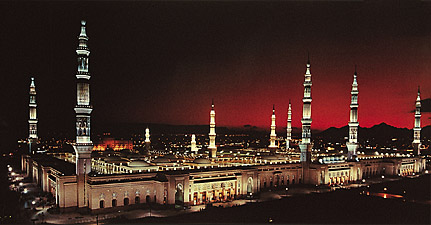
The Prophet Muhammad’s Mosque in Madinah
The Prophet Muhammad’s  Mosque in Madinah.
At the age of forty, Muhammad  received his first revelation from God through the Angel Gabriel.  The revelations continued for twenty-three years, and they are collectively known as the Quran.
As soon as he began to recite the Quran and to preach the truth which God had revealed to him, he and his small group of followers suffered persecution from unbelievers.  The persecution grew so fierce that in the year 622 God gave them the command to emigrate.  This emigration from Makkah to the city of Madinah, some 260 miles to the north, marks the beginning of the Muslim calendar.
After several years, Muhammad  and his followers were able to return to Makkah, where they forgave their enemies.  Before Muhammad  died, at the age of sixty-three, the greater part of the Arabian Peninsula had become Muslim, and within a century of his death, Islam had spread to Spain in the West and as far East as China.  Among the reasons for the rapid and peaceful spread of Islam was the truth and clarity of its doctrine.  Islam calls for faith in only one God, Who is the only one worthy of worship.
The Prophet Muhammad  was a perfect example of an honest, just, merciful, compassionate, truthful, and brave human being.  Though he was a man, he was far removed from all evil characteristics and strove solely for the sake of God and His reward in the Hereafter.  Moreover, in all his actions and dealings, he was ever mindful and fearful of God.
(For more information on the Prophet Muhammad , please refer to the links at More on the Prophet Muhammad .)
 

WHAT IS SHIRK BY AHMAD YAKUBU ALCHEMY

Shirk (Islam)

From Wikipedia, the free encyclopedia
In Islam, shirk (Arabic: شرك‎‎ širk) is the sin of practicing idolatry or polytheism, i.e. the deification or worship of anyone or anything other than the singular God i.e. Allah. Literally, it means ascribing or the establishment of "partners" placed beside God. It is the vice that is opposed to the virtue of Tawhid (monotheism).[1] Those who practice shirk are termed mushrikun.[2]
Within Islam, shirk is an unforgivable crime if it remains unpardoned before death: Allah may forgive any sin if one dies in that state except for committing shirk.[1][3]
The word širk comes from the Arabic root Š-R-K (ش ر ك), with the general meaning of "to share".[4] In the context of the Quran, the particular sense of "sharing as an equal partner" is usually understood, so that polytheism means "attributing a partner to Allah". In the Qur'an, shirk and the related word mušrikūn (مشركون), — those who commit shirk and plot against Islam — often refer to the enemies of Islam (as in verse 9.1–15).


Quran

Islamic commentators on the Quran have emphasized that pre-Islamic Arabic idolatry made a number of godlings (most memorably the three goddesses al-Manāt, al-lāt and ʻUzzā) equal associates of Allah (as the Qur'an discusses in the 53rd surat) and the word mushrikūn (singular: mushrik) is often translated into English as "polytheists".
The Qu'ran and what the people of Nuh's community would say in an effort by the idolaters to ignore and mock Nuh. "They (idolaters) have said: "You shall not leave your gods nor shall you leave Wadd, nor Suwa', nor Yaghuth, nor Ya'uq nor Nasr." (Qur'an 71:23)
Other forms of shirk include the worship of wealth and other material objects. This is pointed out in the Qur'an in one of the stories of the Children of Israel, when they took a calf made of gold for worship,[5] and for which Moses ordered them to repent.
Another form of shirk mentioned in the Qur'an is to take scholars of religion, monks, divines, or religious lawyers as Lord(s) in practice by following their doctrines, and/or by following their rulings on what is lawful when it is at variance to the law or doctrines prescribed by Allah's revelation.[6][7]

Theological interpretation

Medieval Muslim (as well as Jewish) philosophers identified belief in the Trinity with the heresy of shirk, in Arabic, (or shituf in Hebrew), meaning "associationism", in limiting the infinity of God by associating his divinity with physical existence.[8]
In a theological context one commits shirk by associating some lesser being with Allah. This sin is committed if one imagines that there is a partner with Allah whom it is suitable to worship. It is stated in the Quran: "Allah forgives not that partners should be set up with Him, but He forgives anything else, to whom He pleases, to set up partners with Allah is to devise a sin most heinous indeed" (Qur'an 4:48). Many Islamic theologians[who?] extend the sense of worship to include praying to some other being to intercede with Allah on one's behalf, rather than taking one's case to God Himself. The limits of the concept of worship are quite elastic and theologians often describe excessive veneration of some artifact here on earth as shirk.
Atheism is described as shirk because it denies the position of Allah as the unique creator and sustainer of the universe (tawhid ar-rububiyya, the Unity of Lordship). In the same way, the act of shirk is extended to include such things as the notion that God possesses human-like anthropomorphic qualities as well as acts of worship or piety whose inward goal is pride, caprice, or a desire for public admiration, although public prayer is a core Islamic aspect of faith, encouraged and supported in the Quran.

Greater and lesser shirk

Shirk is defined in various ways. Some argue that there is only one type of shirk. Muhammad has classified shirk into two categories:[1]
  • Greater shirk (Shirk-al-Akbar): open and apparent
  • Lesser shirk (Shirk-al-Asghar): concealed or hidden

Greater shirk

Greater shirk or Shirke-al-Akbar means open polytheism. Muhammad describes major shirk in two forms:[1]
  • To associate anyone with Allah Taala as His partner (to believe in more than one god).
  • To associate Allah's attributes with someone else. (Attributing, considering, or portraying Allah's knowledge or might to being those of anyone else)
Other interpretations also derived from the Qur'an and the prophetic tradition (Sunnah) divide shirk into three main categories. Shirk can be committed by acting against the three different categories.

Rubūbīyah (Lordship)

This category of shirk refers to either the belief that others share Allah's Lordship over creation as His equal or near equal, or to the belief that there exists no Lord over creation at all.
  • Shirk by association: This is the shirk concerned with associating "others" with Allah.
  • Shirk by negation: This is shirk in Rubūbīyah (Lordship).

al-Asma was-Sifat (names and attributes)

Shirk in this category includes both the non-believer practices of giving Allah the attributes of his creation as well as the act of giving created beings Allah's names and attributes.
  • Shirk by humanization: In this aspect of shirk, Allah is given the form and qualities of human beings and animals. Due to man's superiority over animals, the human form is more commonly used by idolaters to represent Allah in creation. Consequently, the image of the Creator is often painted, moulded or carved in the shape of human beings possessing the physical features of those who worship them.
  • Shirk by deification: This form of shirk relates to cases where created beings or things are given or claim Allah's names or his attributes. For example, it was the practice of the ancient Arabs to worship idols whose names were derived from the names of Allah. Their main three idols were; Al-lāt (taken from Allah's name al-Elah), al-'Uzza (taken from al-'Aziz), and al-Manat (taken from al-Mannan). During the era of Muhammad there was also a man in a region of Arabia called Yamamah, who claimed to be a prophet and took the name Rahman which, in Islam, belongs only to Allah.

al-'Ibadah (worship)

In this category of shirk, acts of worship are directed to others and not to Allah and the reward for worship is sought from the creation instead of the Creator. As in the case of the previous categories, shirk in al-'Ibadah has two main aspects.
This form of shirk occurs when any act of worship is directed to someone else and not to Allah. It represents the most obvious form of idolatry, against which the prophets were specifically sent by Allah, calling the masses of mankind to give it up. Examples of this shirk are asking for forgiveness, admittance to paradise, etc. that only Allah can provide, from others and not from Allah.

Lesser shirk

Lesser shirk or Shirke-e-Asghar means hidden polytheism. A person commits hidden polytheism when he says tawhid (there is no god except Allah) but his thoughts and actions do not reflect his belief.[1]
"One who offers the ritual prayers in an ostentatious way is a polytheist. One who keeps the fast, or gives alms, or performs the Hajj to show the public his righteousness or to earn good name is a polytheist."
— Muhammad[1]
Mahmud ibn Lubayd reported, "Allah's messenger said: 'The thing I fear for you the most is ash-Shirk al-Asghar.'"
The companions asked, "O messenger of Allah, what is that?"
He replied, "Ar-Riya (showing off), for verily Allah will say on the Day of Resurrection when people are receiving their rewards, 'Go to those for whom you were showing off in the material world and see if you can find any reward from them.'"
Mahmud ibn Lubayd also said, "The Prophet came out and announced, 'O people, beware of secret Shirk!'"
The people asked, "O messenger of Allah, what is secret Shirk?"
He replied, "When a man gets up to pray and strives to beautify his prayer because people are looking at him; that is secret Shirk."
Umar Ibn Al-Khattab narrated that the Messenger of Allah said: "Whoever swears by other than Allah has committed an act of kufr or shirk." (graded hasan by Al-Tirmidhi and saheeh by Al-Hakim)
Ibn Mas’ood, one of Muhammad’s companions, said: "That I should swear by Allah upon a lie is more preferable to me than that I should swear by another upon the truth.

Thursday, 21 July 2016

MUHAMMAD IN THE BIBLE BY AHMAD YAKUBU ALCHEMY

Muhammad in the Bible, (Isaiah 60), Pilgrimage to Mecca..!
The following is an email I received from brother Silent Wisdom; may Allah Almighty always be pleased with him.
From:    silentwisdom_2002@yahoo.com (Silent Wisdom)
To:    Osama Abdallah
Subj:    Muhammad in the Bible, (Isaiah 60), Pilgrimage to Mecca..!
Date:    7/2/02 6:16:02 AM Central Daylight Time
Assalamu Alaikum Warahmatullahi Wabarakatu brother,
Here is some other prophecies about the coming of the holy prophet of God , Muhammad(SAW), and pilgrimage in Bible.
Isaiah 60
60:1 Arise, shine; for thy light is come, and the glory of the LORD is risen upon thee.
60:2 For, behold, the darkness shall cover the earth, and gross darkness the people: but the LORD shall arise upon thee, and his glory shall be seen upon thee.
60:3 And the Gentiles shall come to thy light, and kings to the brightness of thy rising.
60:4 Lift up thine eyes round about, and see: all they gather themselves together, they come to thee: thy sons shall come from far, and thy daughters shall be nursed at thy side.
60:5 Then thou shalt see, and flow together, and thine heart shall fear, and be enlarged; because the abundance of the sea shall be converted unto thee, the forces of the Gentiles shall come unto thee.
60:6 The multitude of camels shall cover thee, the dromedaries of Midian and Ephah; all they from Sheba shall come: they shall bring gold and incense; and they shall shew forth the praises of the LORD.
60:7 All the flocks of Kedar shall be gathered together unto thee, the rams of Nebaioth shall minister unto thee: they shall come up with acceptance on mine altar,
and I will glorify the house of my glory.
In Isaiah 60:1-7, A prophecy about a Holy man (prophet) bringing the light of God to the world.  This holy man would appear in a time of darkness filling the world and covering the earth, He would appear to eliminate the darkness and spread the light of God and his praises.
In Isaiah 60:3 we read "And the Gentiles shall come to thy light ", and that means this Holy Prophet would arise among the Gentiles and his Light would fill his place where the nations would come and visit.
In Isaiah 60:4, we find the people would come from far, the sons and daughters, all would come together for the Light.
In Isaiah 60:5-6 it keeps telling us about the coming of the people from all over the world to the Light.
In Isaiah 60:7, is the clear meaning, it's Kedar (Mekka) , Where its flocks and tribes would be gathered together under the light of God, "they would come up with acceptance on mine altar" (Note: Muslims during the Hajj "pilgrimage" they slaughter the sacrifices as one of the ceremonies and Muslims all over the world share that from their places which is called Eid Al Adha).
"And I Will glorify the house of my glory", and it refers to the Ka'ba in Mekka , the Sacred House for God's glory."
And this prophecy is mentioned in Qur'an :
Surah Al Hajj (the pilgrimage) 22,
26. Behold! We gave the site, to Abraham, of the (Sacred) House, (saying): "Associate not anything (in worship) with Me; and sanctify My House for those who compass it round, or stand up, or bow, or prostrate themselves (therein in prayer).
27. "And proclaim the Pilgrimage among men: they will come to thee on foot and (mounted) on every kind of camel, lean on account of journeys through deep and distant mountain highways; "
(The Noble Quran, 22:26-27)
About "Prophet like unto Moses":
In Deuteronomy 18:18 We find God said to Moses the following:
"I will raise them up a Prophet from among their brethren, like unto thee, and will put my words in his mouth; and he shall speak unto them all that I shall command him."
Regarding this verse, Christians used to interpret it as a prophecy about the coming of the Messiah, and Christian missionaries used to invent so many things to prove the similarity between Jesus and Moses (peace be upon them),but it's self-refuting claim, as it can be refuted by a single verse from Deuteronomy, let's read..
Deuteronomy 34:10 And there arose not a prophet since in Israel like unto Moses, whom the LORD knew face to face,
So this verse from Deuteronomy refutes the claim of "Prophet like unto Moses" to be Jesus (peace be upon them) as Jesus was one of the Prophets of Israel.
Regards,
Your brother in Islam,
Salam (Peace)


From: http://www.answering-christianity.com/walid_shoebat_islam_satan_rebuttal.htm: Now to Isaiah 35:
Isaiah 35
Joy of the Redeemed
1 The desert and the parched land will be glad;
the wilderness will rejoice and blossom. Like the crocus,
2 it will burst into bloom; it will rejoice greatly and shout for joy. The glory of Lebanon will be given to it, the splendor of Carmel and Sharon; they will see the glory of the LORD, the splendor of our God.
3 Strengthen the feeble hands, steady the knees that give way;
4 say to those with fearful hearts, “Be strong, do not fear; your God will come, he will come with vengeance; with divine retribution he will come to save you.”
5 Then will the eyes of the blind be opened and the ears of the deaf unstopped.
6 Then will the lame leap like a deer, and the mute tongue shout for joy. Water will gush forth in the wilderness and streams
in the desert.
7 The burning sand will become a pool, the thirsty ground bubbling springs. In the haunts where jackals once lay, grass and reeds and papyrus will grow.
8 And a highway will be there; it will be called the Way of Holiness; it will be for those who walk on that Way. The unclean will not journey on it; wicked fools will not go about on it.
9 No lion will be there, nor any ravenous beast; they will not be found there. But only the redeemed will walk there,
10 and those the LORD has rescued will return. They will enter Zion with singing; everlasting joy will crown their heads. Gladness and joy will overtake them, and sorrow and sighing will flee away.

Few points to notice here:
1-  We have already seen that the Bible has countless metaphors and allegories in it, in my analysis on Isaiah 34, above.
2-  If Isaiah 35:1 is a metaphor and not a literal, then the prosperity and the bloom that the verse is talking about, for Arabia, could be a spiritual one, and not a worldly and materialistic one.
3-  If this is the case, then this prosperity has got to be Islam!  This is further seen in the "Way of Holiness" (Isaiah 35:8) that Arabia will have in it, that no unclean person is allowed to take.  This would, without a doubt, then be referring to the Muslims' yearly pilgrimage to Mecca, today.
4-  This interpretation of mine is further proven in the following verses from the Glorious Quran and the Bible:
"Behold! We gave the site, To Abraham, of the (Sacred) House [That is the Kaaba that he built], (Saying): 'Associate not anything (In worship) with Me; And sanctify My House For those who compass it round, Or stand up, Or bow, or prostrate themselves (Therein in prayer). And proclaim the Pilgrimage among men: they will come to thee on foot and (mounted) on every kind of camel, lean on account of journeys through deep and distant mountain highways; (The Noble Quran, 22:26-27)"
Isaiah 60
60:1 Arise, shine; for thy light is come, and the glory of the LORD is risen upon thee.
60:2 For, behold, the darkness shall cover the earth, and gross darkness the people: but the LORD shall arise upon thee, and his glory shall be seen upon thee.
60:3 And the Gentiles shall come to thy light, and kings to the brightness of thy rising.
60:4 Lift up thine eyes round about, and see: all they gather themselves together, they come to thee: thy sons shall come from far, and thy daughters shall be nursed at thy side.
60:5 Then thou shalt see, and flow together, and thine heart shall fear, and be enlarged; because the abundance of the sea shall be converted unto thee, the forces of the Gentiles shall come unto thee.
60:6 The multitude of camels shall cover thee, the dromedaries of Midian and Ephah; all they from Sheba shall come: they shall bring gold and incense; and they shall shew forth the praises of the LORD.
60:7 All the flocks of Kedar shall be gathered together unto thee, the rams of Nebaioth shall minister unto thee: they shall come up with acceptance on mine altar,
and I will glorify the house of my glory.
Please visit the following articles:
  • http://www.answering-christianity.com/yearly_pilgrimage.htm
  • http://www.answering-christianity.com/paran.htm
  • http://www.answering-christianity.com/isaiah_mecca.htm (Mecca in the book of Isaiah)
  • JESUS CHRIS IS NOT GOD ACCORDING TO BIBLE BY AHMAD YAKUBU ALCHEMY

    A Series of Answers to Common Questions

    Question:
    How can Jesus be God when the Hebrew Bible says God is not a man? Cf. Numbers 23:19; 1 Samuel 15:29; Hosea 11:9.
    Answer:
    None of those biblical texts say God CANNOT be a man, but say that God IS not a man, a major difference:
    "God IS not man, that he should lie, or a son of man, that he should change his mind. Has he said, and will he not do it? Or has he spoken, and will he not fulfill it?" Numbers 23:19
    "And also the Glory of Israel will not lie or have regret, for he IS not a man, that he should have regret." 1 Samuel 15:29
    "I will not execute my burning anger; I will not again destroy Ephraim; for I am God and not a man, the Holy One in your midst, and I will not come in wrath." Hosea 11:9
    It is true that during the Old Testament period God hadn’t become a man, but this doesn’t deny that God could choose to later become a man, specifically in the Person of the Lord Jesus Christ. The Hebrew Bible itself supports the view that God can become a man, without ceasing to be God, since there are places where God appeared in human form:
    "The LORD appeared to Abraham near the great trees of Mamre while he was sitting at the entrance to his tent in the heat of the day. Abraham looked up and saw THREE MEN standing nearby. When he saw them, he hurried from the entrance of his tent to meet them and bowed low to the ground. He said, ‘If I have found favor in your eyes, my lord, do not pass your servant by. Let a little water be brought, and then you may all wash YOUR FEET and rest under this tree. Let me get you something to eat, so you can be refreshed and then go on your way-now that you have come to your servant.’ ‘Very well,’ they answered, ‘do as you say’… He then brought some curds and milk and the calf that had been prepared, and set these before them. WHILE THEY ATE, he stood near them under a tree. ‘Where is your wife Sarah?’ they asked him. ‘There, in the tent,’ he said. THEN THE LORD SAID, ‘I will surely return to you about this time next year, and Sarah your wife will have a son’… THEN THE LORD SAID TO ABRAHAM, ‘Why did Sarah laugh and say, "Will I really have a child, now that I am old?" Is anything too hard for the LORD? I will return to you at the appointed time next year and Sarah will have a son.’ Sarah was afraid, so she lied and said, ‘I did not laugh.’ BUT HE SAID, ‘Yes, you did laugh.’ WHEN THE MEN GOT UP TO LEAVE, they looked down toward Sodom, and Abraham walked along with them to see them on their way. THEN THE LORD SAID, ‘Shall I hide from Abraham what I am about to do?’ ... THEN THE LORD SAID, ‘The outcry against Sodom and Gomorrah is so great and their sin so grievous that I will go down and see if what they have done is as bad as the outcry that has reached me. If not, I will know.’ The men turned away and went toward Sodom, BUT ABRAHAM REMAINED STANDING BEFORE THE LORD. Then Abraham APPROACHED HIM and said: ‘Will you sweep away the righteous with the wicked? What if there are fifty righteous people in the city? Will you really sweep it away and not spare the place for the sake of the fifty righteous people in it? Far be it from you to do such a thing - to kill the righteous with the wicked, treating the righteous and the wicked alike. Far be it from you! Will not the Judge of all the earth do right?’ THE LORD SAID, ‘If I find fifty righteous people in the city of Sodom, I will spare the whole place for their sake’… WHEN THE LORD HAD FINISHED SPEAKING WITH ABRAHAM, HE LEFT, and Abraham returned home." Genesis 18:1-5, 8-10a, 13-17, 20-26, 33
    To support the premise that God actually appeared as one of the three men note that Genesis 18:22 says the men got up and headed towards Sodom and Gomorrah, whereas Yahweh remained behind with Abraham:
    "So the men turned from there, and went toward Sodom; but Abraham still stood before the LORD." RSV
    Now if Yahweh wasn't one of the three men then we would expect to find that all three men went ahead to Sodom. But this is not what we find since the very next chapter says:
    "The TWO angels came to Sodom in the evening; and Lot was sitting in the gate of Sodom. When Lot saw them, he rose to meet them, and bowed himself with his face to the earth, and said, 'My lords, turn aside, I pray you, to your servant's house and spend the night, and wash your feet; then you may rise up early and go on your way.' They said, 'No; we will spend the night in the street.' But he urged them strongly; so they turned aside to him and entered his house; and he made them a feast, and baked unleavened bread, and they ate." Genesis 19:1-3 RSV
    Only two men show up at Sodom, which the text identifies as two angels. Where was the third man? You guessed it, the third man had remained behind to talk to Abraham since that man was actually Yahweh God who had appeared with the other two!
    Noted Messianic Jewish scholar, writer, and evangelist Dr. Michael L. Brown mentions the interesting comments the rabbis made about this specific text:
    "According to the Talmud (b. Bava Messia 86b), God himself was paying Abraham a personal sick call, checking on him after the ordeal of circumcision. Here is the expanded translation of Rabbi Adin Steinsaltz (the actual words of the Talmud are in bold). We read that Abraham went out
    and saw the Holy One, blessed be He, standing at the door of his tent, as the verse says, 'And the Lord appeared to him by the terebinths of Mamre.' This is what the verse is referring to when it says (Gen 18:3): 'And he said, "O Lord, if now I have found favor in Your sight, do not, I pray you, pass by Your servant."' In this verse Abraham was speaking to God himself (and so addressed Him as Lord and referred to himself as His servant.) When God saw that Abraham was busy tying and untying the bandages of his circumcision, He said to Himself, 'It is not fitting that I stay here while Abraham is taking care of His wound.' He was about to remove His presence when Abraham pleaded with Him to stay a little longer. And this is also what the verse refers to when it says (Genesis 18:2): 'And he raised his eyes and looked, and, behold, three men stood by him; and when he saw them, he ran to meet them.'
    Now, here, we have a biblical text that indisputably says that the Lord - Hebrew YHWH - appeared to Abraham and the Talmud even relates in story form how Abraham actually saw 'the Holy One, blessed be He,' addressing him as Lord. Yet, just a few words later, this very same biblical text says that Abraham looked up and saw three men, the Talmud giving the impression that God himself appeared to Abraham, only to be replaced by these men.
    Who were the three men?... According to the Talmud, the three men were the angels, Michael, Gabriel, and Raphael, each with his own special task. Michael came to give Sarah the good news that she would soon have a son, Raphael came to heal Abraham, and Gabriel went to overthrow the cities of Sodom and Gomorrah (although the Talmud says that Michael went along with Gabriel so as to rescue Lot). But there are problems with this view too. First, the text nowhere says that the angels replaced or represented the Lord. Instead, the Bible says that the Lord appeared to Abraham, that he saw three men, and that he addressed one of them both as Lord ('adonai) and as YHWH. Second, the context indicates clearly that two of the men went on to Sodom- where they are identified as angels- and that Abraham stayed before YHWH, with whom he had extended dialogue. To be faithful to the Scriptures we must say that the Lord, with two angels, appeared to Abraham, and all three appeared as human beings who spoke, ate, and drank with Abraham and Sarah." (Brown, Answering Jewish Objections to Jesus: Theological Objections [Baker Books, Grand Rapids, MI 2000], Volume 2, pp. 31-33)
    Despite the rabbis trying to imply that Yahweh didn't appear as a man and wasn't one of the three men, a view which clearly contradicts the plain reading of the text, their admission that Abraham did in fact see God is interesting nonetheless.
    Other references to God manifesting in human form include:
    "So Jacob was left alone, and A MAN wrestled with him till daybreak. When THE MAN saw that he could not overpower him, he touched the socket of Jacob's hip so that his hip was wrenched as he wrestled with THE MAN. Then THE MAN said, ‘Let me go, for it is daybreak.’ But Jacob replied, ‘I will not let you go unless you bless me.’ THE MAN asked him, ‘What is your name?’ ‘Jacob,’ he answered. Then THE MAN said, ‘Your name will no longer be Jacob, but Israel, because you have struggled with God and with men and have overcome.’ Jacob said, ‘Please tell me your name.’ But he replied, ‘Why do you ask my name?’ Then he blessed him there. So Jacob called the place Peniel, saying, ‘It is because I SAW GOD FACE TO FACE, and yet my life was spared.’" Genesis 32:24-30
    "And above the expanse over their heads there was the likeness of a throne, in appearance like sapphire; and seated above the likeness of a throne was a likeness with A HUMAN APPEARANCE. And upward from what had the appearance of his waist I saw as it were gleaming metal, like the appearance of fire enclosed all around. And downward from what had the appearance of his waist I saw as it were the appearance of fire, and there was brightness around him. Like the appearance of the bow that is in the cloud on the day of rain, so was the appearance of the brightness all around. Such was the appearance of the likeness of the glory of the LORD. And when I saw it, I fell on my face, and I heard the voice of one speaking… AND HE SAD TO ME, ‘Son of man, stand on your feet, and I will speak with you.’ And as he spoke to me, the Spirit entered into me and set me on my feet, and I heard him speaking to me. And he said to me, ‘Son of man, I send you to the people of Israel, to nations of rebels, who have rebelled against me. They and their fathers have transgressed against me to this very day. The descendants also are impudent and stubborn: I send you to them, and you shall say to them, "Thus says the Lord GOD." And whether they hear or refuse to hear (for they are a rebellious house) they will know that a prophet has been among them. 6And you, son of man, be not afraid of them, nor be afraid of their words, though briers and thorns are with you and you sit on scorpions. Be not afraid of their words, nor be dismayed at their looks, for they are a rebellious house. And you shall speak my words to them, whether they hear or refuse to hear, for they are a rebellious house. But you, son of man, hear what I say to you. Be not rebellious like that rebellious house; open your mouth and eat what I give you.’ And when I looked, behold, a hand was stretched out to me, and behold, a scroll of a book was in it. And he spread it before me. And it had writing on the front and on the back, and there were written on it words of lamentation and mourning and woe.’" Ezekiel 1:26-28, 2:1-10
    The Hebrew Bible even predicts that the Messiah of David is actually God in the flesh:
    "For to us a child is born, to us a son is given; and the government shall be upon his shoulder, and his name shall be called Wonderful Counselor, Mighty God, Everlasting Father, Prince of Peace. Of the increase of his government and of peace there will be no end, on the throne of David and over his kingdom, to establish it and to uphold it with justice and with righteousness from this time forth and forevermore. The zeal of the LORD of hosts will do this." Isaiah 9:6-7
    Here, the Messiah is a child who is born, showing that he is truly human, while also being the Mighty God at the same time.
    "Behold, the days are coming, declares the LORD, when I will raise up for David a righteous Branch, and he shall reign as king and deal wisely, and shall execute justice and righteousness in the land. In his days Judah will be saved, and Israel will dwell securely. And this is the name by which he will be called: ‘Yahweh is our righteousness.’" Jeremiah 23:5-6
    The Messiah is David’s Branch, implying that he is a human descendant of David, while also being Yahweh our righteousness. These texts clearly indicate that God will become man in the Person of the Messiah, whom the NT says is the Lord Jesus!
    Furthermore, Moses also calls God "a man of war" (ish milhamah):
    "The LORD is a man of war: the LORD is his name." Exodus 15:3 KJV
    Other places where God is called a man of war include:
    "The LORD shall go forth as a mighty man, he shall stir up jealousy like a man of war (ish milhamah): he shall cry, yea, roar; he shall prevail against his enemies." Isaiah 42:13 KJV
    The foregoing demonstrates that in some ways God and man are alike, i.e. both God and man have a warrior spirit. Yet in other respects God is completely unlike man, namely that God is perfectly holy and consistent whereas man is not.
    Thus, passages such as Numbers 23:19 do not rule out the possibility of God appearing as a man and/or becoming a man. It simply states that God's essence is distinct from man, without denying the fact that God could/would eventually take on a human nature. In reality, these texts simply illustrate that God is not a man by nature and doesn’t therefore lie or change his mind like men normally do.
    What this basically means is that if God chose to become a man then he wouldn’t be like other men … he would be completely pure and holy. And since God did become man in Christ we find that this is exactly the kind of person Jesus was, namely, absolutely pure and sinless:
    "What have you to do with us, Jesus of Nazareth? Have you come to destroy us? I know who you are--the Holy One of God." Mark 1:24
    "Simon Peter answered him, ‘Lord, to whom shall we go? You have the words of eternal life, and we have believed, and have come to know, that you are the Holy One of God.’" John 6:68-69
    "The one who speaks on his own authority seeks his own glory, but the one who seeks the glory of him who sent him is true, and in him there is no falsehood." John 7:18
    "And he who sent me is with me. He has not left me alone, for I always do the things that are pleasing to himWhich one of you convicts me of sin? If I tell the truth, why do you not believe me?" John 8:29, 46
    "I will no longer talk much with you, for the ruler of this world is coming. He has no claim on me," John 14:30
    "But you denied the Holy and Righteous One, and asked for a murderer to be granted to you, and you killed the Author of life, whom God raised from the dead. To this we are witnesses." Acts 3:14-15
    "For our sake he made him to be sin who knew no sin, so that in him we might become the righteousness of God." 2 Corinthians 5:21
    "For we do not have a high priest who is unable to sympathize with our weaknesses, but one who in every respect has been tempted as we are, yet without sin." Hebrews 4:15
    "For it was indeed fitting that we should have such a high priest, holy, innocent, unstained, separated from sinners, and exalted above the heavens." Hebrews 7:26
    "how much more will the blood of Christ, who through the eternal Spirit offered himself without blemish to God, purify our conscience from dead works to serve the living God." Hebrews 9:14
    "knowing that you were ransomed from the futile ways inherited from your forefathers, not with perishable things such as silver or gold, but with the precious blood of Christ, like that of a lamb without blemish or spot." 1 Peter 1:18-19
    "He committed no sin, neither was deceit found in his mouth." 1 Peter 2:22
    "For Christ also suffered once for sins, the righteous for the unrighteous, that he might bring us to God, being put to death in the flesh but made alive in the spirit," 1 Peter 3:18
    "My little children, I am writing these things to you so that you may not sin. But if anyone does sin, we have an advocate with the Father, Jesus Christ the righteous." 1 John 2:1
    "And everyone who thus hopes in him purifies himself as he is pure… You know that he appeared to take away sins, and in him there is no sin." 1 John 3:3, 5

    JESUS IS NOT GOD BY AHMAD YAKUBU ALCHEMY

     BYB AHMAD YAKUBU ALCHEMY
    It will be quickly obvious that they often referred to him as a servant of God, but never Son of God. Peter, for example, said:
    “The God of Abraham, Isaac and Jacob, the God of our fathers, has glorified his servant Jesus” (Acts 3:13).
    Peter further said: “God raised up his servant” (Acts 3:26), where the title servant refers to Jesus.
    Not only Peter, but the entire group of believers viewed Jesus as God’s servant. When they raised their voices together in prayer to God, in the course of their speaking to God they called Jesus “your holy servant Jesus whom you anointed” (Acts 4:27). They repeated this title also in verse 30. Consistently, Jesus was being called servant of God by the original followers of Jesus.
    Some people mistakenly thought that the disciples called Jesus Son of God. An inconsistency of translation actually helped to give this wrong impression. In the King James Bible, the translators call Jesus “Son of God” in Acts 3:13, 26, and “child of God” in Acts 4:27. They simply translated the Greek word paida as “son” or “child”. But the word paida also means “servant”, and the present context demands this translation since the author of Acts is trying in this passage to establish that Jesus is indeed the servant of God.
    The translators knew that the Greek word paida means servant. When the same word was used for David in chapter 4, verse 25, they translated it “servant”. Why not call Jesus also by the same title? Or, if they feel that “son” is the correct translation, why not also call David “Son of God”? Jesus and David are both called by the same title in Greek. Why not call them by a same title in English also?
    Other translators recognised this inconsistency and corrected it in the modern translations of the Bible. Therefore the New International Version of the Bible and many others call Jesus Servant of God in the verses already quoted above. Nevertheless, the fact that Jesus was God’s servant was so well known that even the King James Bible called him by this title in Matthew 12:18. Referring back to Isaiah 42:1, Matthew identified Jesus as the servant of the one true God Yahweh.
    In the next part, we will see how the eagerness in some people to call Jesus “Son of God” led them to invent explanations that indirectly insult God.

    JESUS CHRIS IS A MUSLIM: ACCORDING TO BIBLE BY AHMAD YAKUBU ALCHEMY


    When a Muslim prays or thanks God he does so in the same fashion and from that was taught to Abraham, Moses, Jesus, and all of the previous Prophets of God (may peace be upon them all). You will find that when a Muslim prays he places his forehead on the ground in total submission to God Almighty. Let us see how the Prophets (including Jesus) prayed according to the Qur'an and Bible:

    "These are some of the Prophets whom GOD blessed. They were chosen from among the descendants of Adam, and the descendants of those whom we carried with Noah, and the descendants of Abraham and Israel, and from among those whom we guided and selected. When the revelations of the Most Gracious are recited to them, they fall prostrate, weeping." – Qur’an English Translation [19:58]

    "And he (Jesus) went a little farther, and fell on his face, and prayed, saying, O my Father, if it be possible, let this cup pass from me: nevertheless not as I will, but as thou wilt." - New Testament (Matthew 26:39)

     
    "And when the disciples heard it, they fell on their face, and were sore afraid." - New Testament (Matthew 17:6)

     
    "And Abram fell on his face: and God talked with him, saying," - Old Testament (Tanakh) (Genesis 17:3)

     
    "Then Abraham fell upon his face, and laughed, and said in his heart, Shall a child be born unto him that is an hundred years old? and shall Sarah, that is ninety years old, bear?" - Old Testament (Tanakh) (Genesis 17:17)

     
    "And Moses made haste, and bowed his head toward the earth, and worshipped." - Old Testament (Tanakh) (Exodus 34:8)

     
    “And Moses and Aaron went from the presence of the assembly unto the door of the tabernacle of the congregation, and they fell upon their faces: and the glory of the LORD appeared unto them.” - Old Testament (Tanakh) (Numbers 20:6)

     
    "And the LORD spake unto Moses and unto Aaron, saying, Separate yourselves from among this congregation, that I may consume them in a moment. And they fell upon their faces, and said, O God, the God of the spirits of all flesh, shall one man sin, and wilt thou be wroth with all the congregation?" - Old Testament (Tanakh) (Numbers 16:20-22)

     
    And Ezra blessed the LORD, the great God. And all the people answered, Amen, Amen, with lifting up their hands: and they bowed their heads, and worshipped the LORD with [their] faces to the ground. - Old Testament (Tanakh) (Nehemiah 8:6)

     
    "And he said, Nay; but as captain of the host of the LORD am I now come. And Joshua fell on his face to the earth, and did worship, and said unto him, What saith my Lord unto his servant?" - Old Testament (Tanakh) (Joshua 5:14)

     
    "And it came to pass, while they were slaying them, and I was left, that I fell upon my face, and cried, and said, Ah Lord GOD! wilt thou destroy all the residue of Israel in thy pouring out of thy fury upon Jerusalem?" - Old Testament (Tanakh) (Ezekiel 9:8)

     
    "And Jehoshaphat bowed his head with his face to the ground: and all Judah and the inhabitants of Jerusalem fell before the LORD, worshipping the LORD." - Old Testament (Tanakh) (2 Chronicles 20:18)

     
    "And it came to pass, when I prophesied, that Pelatiah the son of Benaiah died. Then fell I down upon my face, and cried with a loud voice, and said, Ah Lord GOD! wilt thou make a full end of the remnant of Israel?" - Old Testament (Tanakh) (Ezekiel 11:13)


    So although some people may admit :
    “Ok, yea these verses speak of Jesus and the other Prophets prostrating themselves in prayer but we still don't know the exact details on how they prostrated and/or if they did so in the same manner as Muslims do today?”

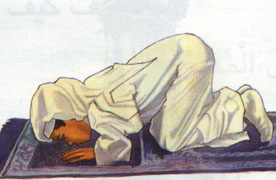
    However, using common sense I would have to challenge anyone to give an example of how any of these Prophets could have "fell on their face" i.e. prostrated in any other position than this:


    Also, some people may further state:
    “If the style of prayer was truly important I would assume that the Torah and/or Jesus would have pointed that out directly.”

    Again, I think this question can be answered with simple reasoning. If a person acknowledges someone as God's chosen Prophet, then wouldn't you think intuitively that the way in which that Prophet prayed would be the best example for all of mankind to follow.

    And if a true follower and believer of that Prophet doesn't adapt to the way in which that Prophet worships then how can anyone justify that this Prophet was sent from God to guide Mankind in the first place, yet not even worship God in a like manner? The Prophets are supposed to be the ideal examples on how to live one's life on Earth.

    Many Christians who convert to Islam today testify that they are now better "Christians" for doing so. The word "Christian" simply means "a follower of Christ" or "Christ-ian". So how are these people who are now professing Muslims claiming to be closer follower's of Jesus.

    Let's think about this logically by examining what the Bible says of Jesus. For example, if we read the gospels we will see accounts of Jesus where he prayed with his face to the ground, greeted his fellow believers with expressions of peace, and fasted for lengthy amounts of time.

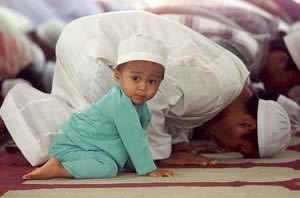
    Now honestly ask yourself, who truly follows Jesus' example today? As you may know, Muslims pray humbly with their forehead touching the ground at least five times a day...Also, Muslims always greet each other with the phrase "Peace be upon you" as mentioned in the previous section...and further more just as Jesus fasted for 40 days in the wilderness Muslims fast for an entire month during the month of Ramadan.

    Indeed many former Christians acknowledge that they were Muslims in every sense of the word before discovering the confirmation of their natural beliefs within the text of the Qur'an. You see mankind's disposition of monotheism is inseparable from the human psyche. This innate phenomena in Islam is termed "Al-fitra."
    "Now have We caused the Word to reach them themselves, in order that they may receive admonition. Those to whom We sent the Book before this,- they do believe in this (revelation): And when it is recited to them, they say: "We believe therein, for it is the Truth from our Lord: indeed we have been Muslims (bowing to Allah.s Will) from before this. Twice will they be given their reward, for that they have persevered, that they avert Evil with Good, and that they spend (in charity) out of what We have given them." – Qur’an English Translation [28:51-54]


    To Pray as an a Ancient Jew

    Furthermore,
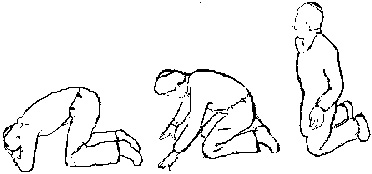
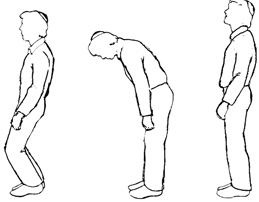
    In a book entitled "To Pray as a Jew" I found a lengthy explanation of the Prayers as done by the ancient Jews and few of the contemporary Jews. In this book the author put diagrams showing the movement and positions during the prayer. One look at these illustrations is enough for the Muslims to realize the similarity of the prayers of the Jews then and Salat Prayer as practiced by the Muslims.


    In his comment about these positions, the author wrote:

    "In most contemporary congregations very few people keep to the tradition of falling prostrate. Sometimes it is only the Prayer leader and the rabbi who does so. In more traditional congregations, however, some worshipers, men and women, will join the Prayer Leader and rabbi in the act of prostrating themselves. In Israeli synagogues, the practice is more widespread than in synagogues elsewhere. Since this is a position that we are unaccustomed to, one who has never done this before might very well demur. But once accomplished, the experience provides such a spiritual uplift that one looks forward to repeating it. Those willing to try this ancient ritual form on the rare occasions that call for it might welcome the following diagrams of the correct procedure"

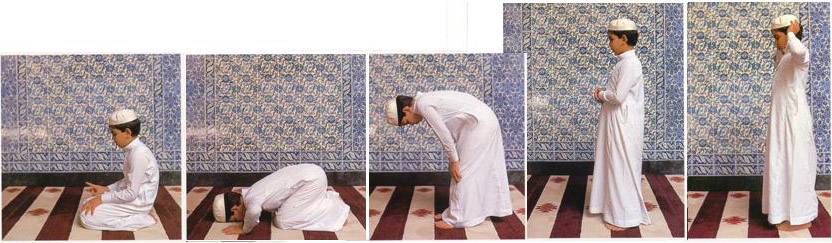
    Now compare the above diagram to the daily Islamic Prayer (Salah):


    It is also interesting to learn from this book that the prayers of the Jews involve wash before the prayers, (like Wuduu or ablution for Muslims), and the call for Prayers (like the Azan for the Muslims).

    Here's the case in point of the entire page:
    Muslims follow the Religion OF Jesus; the faith that he spoke of and practiced. Likewise, We worship The same God that he worshipped; The God of Abraham and The God of all of the Prophets whom lived on Earth.

    Whereas today some people who claim to follow the way of Jesus, Abraham, and Moses (peace be upon them) have deviated from the path. And in the case of Christianity, people have mistakenly created an entire faith about the Prophet Jesus and thus have made him into something that he never claimed to be.

    "Abraham was not a Jew nor yet a Christian; but an upright Muslim (one who submitted their will to God)." – Qur’an English Translation [3:67]

    Reference:
    Title: To pray as a Jew : a guide to the prayer book and the synagogue service
    Author: Donin, Hayim
    Publisher: New York : Basic Books, c1980
    Paging xxii, 384 p. : ill. ; 25 cm